
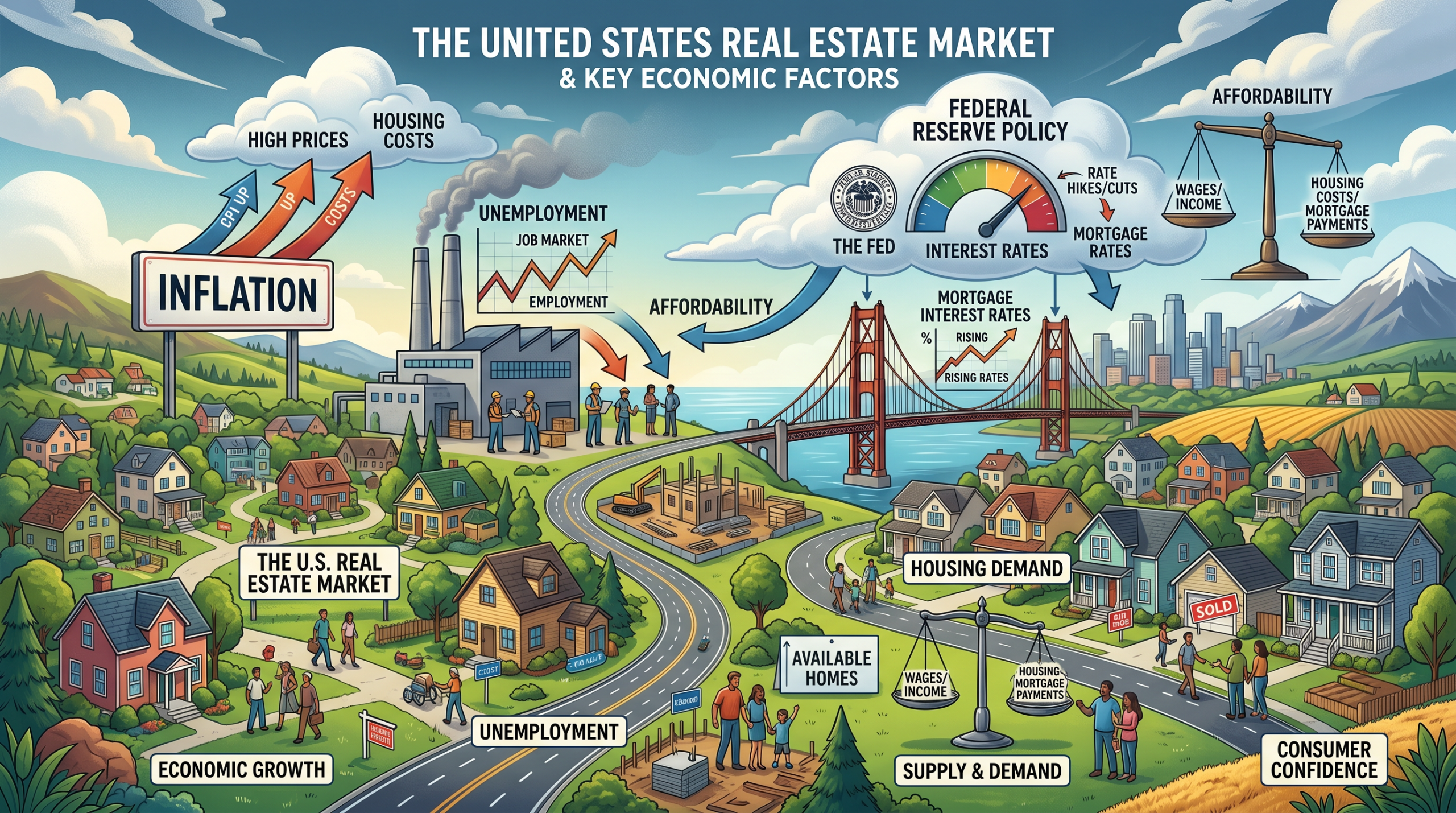
The U.S. real estate market is closely tied to the overall economy. When key economic factors shift — such as inflation, unemployment, Federal Reserve policy, and mortgage interest rates — the housing market often reacts quickly. Understanding these relationships can help buyers, sellers, and investors make smarter real estate decisions.
Inflation and Housing Prices
Inflation occurs when the cost of goods and services rises over time. In real estate, inflation often increases the cost of construction materials, labor, insurance, and property maintenance.
Historically, moderate inflation can push home prices higher because real estate is often viewed as a hedge against inflation. However, when inflation rises too quickly, the Federal Reserve may step in and raise interest rates to slow the economy — which can reduce housing affordability and slow buyer demand.
Key Takeaway:
- Moderate inflation may support rising home values.
- High inflation often leads to higher interest rates and slower home sales.
Unemployment and Buyer Confidence
Employment plays a major role in housing demand. When unemployment is low and wages are growing, consumers feel more confident purchasing homes and making long-term financial commitments.
During periods of high unemployment, fewer buyers qualify for loans, consumer confidence weakens, and housing demand may soften. Historically, recessions and job losses tend to slow the real estate market.
Key Takeaway:
- Strong job growth usually strengthens the housing market.
- Rising unemployment can reduce buyer activity and home sales.
Federal Reserve Interest Rates
The Federal Reserve does not directly control mortgage rates, but its policies strongly influence borrowing costs throughout the economy.
When inflation rises, the Fed often increases the federal funds rate to slow spending and borrowing. Higher rates generally lead to:
- Higher mortgage payments
- Reduced affordability
- Slower home price growth
- Lower transaction volume
When the Fed lowers rates, borrowing becomes more affordable, which can stimulate housing demand and increase home sales.
Key Takeaway:
- Rising Fed rates typically cool the housing market.
- Lower Fed rates often encourage buying and refinancing.
Mortgage Interest Rates
Mortgage rates are one of the biggest factors affecting real estate activity. Even a small increase in rates can significantly change monthly payments.
For example, a buyer financing a home at 3% interest may afford far more than the same buyer at 7% interest. As mortgage rates rise:
- Buyers may reduce their price range
- Some buyers pause their search entirely
- Sellers may receive fewer offers
Historically, lower mortgage rates tend to increase demand and support higher home prices.
Key Takeaway:
- Lower mortgage rates increase affordability and buyer demand.
- Higher rates reduce purchasing power and can slow the market.
How These Factors Work Together
The real estate market rarely reacts to just one economic issue. Instead, housing trends are usually influenced by several factors happening at the same time.
For example:
- High inflation may lead to higher Fed rates.
- Higher Fed rates usually increase mortgage rates.
- Higher mortgage rates reduce affordability.
- Reduced affordability may slow home sales and price growth.
At the same time, strong employment can help offset some of these pressures by keeping consumer confidence high.
Final Thoughts
Real estate has always been closely connected to the broader U.S. economy. Inflation, unemployment, Federal Reserve policy, and mortgage interest rates all play major roles in shaping housing demand, affordability, and home values.
By understanding these economic indicators, buyers, sellers, and investors can better prepare for market shifts and make more informed real estate decisions.
Call Rod to discuss your situation.

Rod McIntosh | CA DRE# 00601009
Exp Realty of CA Inc. | CA DRE# 01878522
- (661) 803-1662
- (818) 898-2255
- (661) 259-1100