

Southern California Real Estate in Winter 2026: What’s Ahead for Homeowners, Buyers, and Sellers?
By Rod McIntosh | Southern California Real Estate
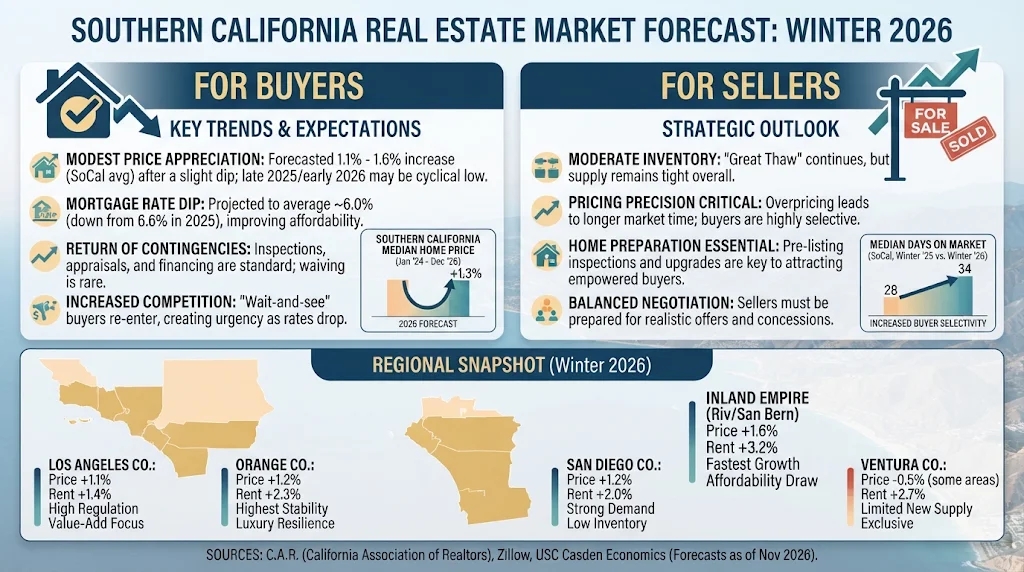
The Southern California housing market is heading into the final months of 2026 with a different set of challenges and opportunities than we saw earlier in the year. For some homeowners, the question is whether now is the right time to cash in on years of home appreciation. For prospective buyers, it’s whether waiting for lower mortgage rates will ultimately save money or cause them to miss an opportunity.
And for those who are simply watching the market, there is another important question: Where is Southern California real estate headed in 2027?
The answer isn’t as straightforward as some national housing headlines might suggest.
Southern California remains a collection of very different real estate markets. A home in coastal Orange County may experience an entirely different level of demand than a property in the Inland Empire. A desirable neighborhood in Los Angeles may continue attracting multiple interested buyers while another community experiences longer selling times and price adjustments.
As we enter winter, several forces are shaping the direction of the market: borrowing costs, available housing inventory, buyer confidence, and the willingness of homeowners to put their properties up for sale.
For anyone considering a move, understanding these trends can make a meaningful difference.
In this winter market outlook, The Carnahan Family examines what the latest numbers are telling us, where opportunities may develop, and how buyers and sellers can position themselves for the months ahead.
1. A Housing Market That Is Finding a New Rhythm
The Southern California housing market has spent much of the past several years adjusting to a combination of elevated home prices and higher mortgage rates.
Buyers who once competed aggressively for available properties have become more selective. Sellers who became accustomed to rapid sales and multiple offers have had to adjust their expectations in some neighborhoods.
But this doesn’t necessarily mean the market is in trouble.
It means the factors influencing real estate decisions have changed.
According to the California Association of REALTORS® September 2026 report, California’s existing single-family home sales declined 6.5% compared with September 2025. Meanwhile, the statewide median home price reached $899,720, an increase of 1.7% over the previous year.
Southern California recorded a 3.0% year-over-year increase in its regional median home price, even as regional sales activity declined 9.1%.
These numbers illustrate an important distinction: fewer transactions do not automatically translate into lower property values.
For homeowners, this suggests that property values may remain relatively resilient in desirable locations. For buyers, it means that negotiating opportunities may exist without necessarily requiring a major decline in asking prices.
The market is becoming more selective, and that makes understanding individual neighborhoods more important than ever.

2. Five Market Numbers Worth Watching This Winter
Before making predictions about the months ahead, it helps to understand where the market stands today.
The following figures provide a useful snapshot of the latest available September 2026 housing data and early November mortgage conditions.
| Market indicator | Latest reported figure |
|---|---|
| California median single-family home price | $899,720 |
| Annual California price change | +1.7% |
| Annual Southern California median price change | +3.0% |
| Annual Southern California home sales change | -9.1% |
| 30-year fixed mortgage rate, November 5 | 7.18% |
Sources: California Association of REALTORS® September 2026 report and Freddie Mac November 5, 2026 mortgage survey.
There are three important takeaways from these numbers.
First, home values are holding up better than transaction volume. Buyers are still purchasing homes, but higher borrowing costs and affordability concerns are limiting the number of completed transactions.
Second, Southern California is not experiencing uniform price movement. Some counties and communities are performing better than others. Regional averages should not be mistaken for the value trend of an individual property.
Third, financing remains a major consideration. A mortgage rate that looks relatively small on paper can have a substantial impact on a household’s monthly budget when purchasing an expensive Southern California property.
For homeowners considering a sale, this is a good reminder to obtain a current, property-specific valuation rather than relying on statewide averages.
3. Mortgage Rates Could Determine How Active the Winter Market Becomes
Mortgage rates continue to influence nearly every part of the housing market.
According to Freddie Mac, the average 30-year fixed mortgage rate stood at 7.18% on November 5, 2026. That compares with 7.24% the previous week and 6.22% at the same time in 2025.
Although rates have recently moved lower, they remain an important obstacle for buyers who are already facing high home prices.
Consider what happens when a buyer purchases a home with a $700,000 mortgage.
A difference of even half a percentage point in the interest rate can change the monthly principal and interest payment by several hundred dollars over the life of the loan.
That difference can influence:
-
How much a buyer qualifies to borrow.
-
Whether a buyer chooses a condominium, townhome, or single-family residence.
-
Which neighborhoods remain within budget.
-
Whether a buyer decides to purchase now or postpone the decision.
-
How much flexibility a household has for other expenses.
There is also an interesting dynamic affecting existing homeowners.
Many people purchased or refinanced their homes when mortgage rates were considerably lower. Moving into another property may mean accepting a significantly higher monthly payment, even if the next home isn’t substantially more expensive.
This reluctance to give up an existing low-rate mortgage is one reason housing inventory can remain constrained.
What should buyers do?
Rather than attempting to predict the exact direction of mortgage rates, buyers should focus on what they can comfortably afford today. A qualified lender can help evaluate different loan structures, down payment options, and potential refinancing considerations.
4. Could Winter Be an Opportunity for Buyers Who Have Been Waiting?

The winter housing market often operates differently from the spring and summer seasons.
Families may be reluctant to move during the holidays, some sellers postpone listing until the new year, and prospective buyers may temporarily put their searches on hold.
But there are still people who need to buy.
Job relocations, growing families, downsizing, retirement, and changes in personal circumstances don’t always follow the traditional real estate calendar.
For buyers willing to remain active, winter can offer several potential advantages.
More time to evaluate properties. With fewer competing buyers in certain markets, you may have additional time to consider a property and evaluate whether it meets your needs.
Potentially more negotiating flexibility. A seller whose property has been on the market for several weeks may be more receptive to reasonable offers or requests for concessions.
An opportunity to avoid spring competition. If buyer activity increases in early 2027, waiting until then could mean competing with more people for desirable homes.
A chance to identify overlooked properties. Homes that have experienced a price reduction or have been available longer than expected may deserve a closer look.
However, buyers should remember that the best homes don’t necessarily become bargains simply because they are listed during the holidays.
A desirable property in a sought-after neighborhood may still sell quickly.
The key is to be prepared financially and understand the market value of the properties you’re considering.
5. Sellers: The Right Strategy May Matter More Than the Time of Year
If you are thinking about selling your home, you may be wondering whether to list before the end of 2026 or wait until the spring selling season.
There isn’t one answer that works for every homeowner.
Traditionally, spring brings more buyers and additional listings. But that doesn’t mean winter sellers are at a disadvantage in every situation.
In fact, there may be benefits to entering the market before the number of competing listings increases.
The more important consideration is whether your property is prepared, priced appropriately, and marketed to reach the right audience.
Here are several areas sellers should focus on.
Understand your competition.
Look beyond the number of homes currently listed in your community. Pay attention to properties similar to yours, including their condition, location, asking prices, and how long they have been available.
Don’t confuse asking price with market value.
A home’s value is influenced by what buyers are actually willing to pay, not simply what another homeowner hopes to receive.
Make the first impression count.
Professional photography, thoughtful staging, landscaping, and a clean, inviting presentation can help a property stand out.
Be prepared to negotiate.
Depending on the property and market conditions, buyers may request closing cost assistance, repairs, or other concessions. Understanding these possibilities before receiving an offer can help you make better decisions.
Have a plan for your next move.
Selling is only one part of the equation. If you are purchasing another property, downsizing, relocating, or moving closer to family, your selling strategy should account for what comes next.
For some homeowners, listing during winter may make perfect sense. Others may benefit from preparing now and entering the market in early 2027.
The important thing is to make that decision with current local information.
6. Five Southern California Markets to Keep on Your Radar
One of the biggest mistakes people make when following real estate news is assuming that an entire region behaves the same way.
Southern California has an enormous variety of housing markets. Coastal communities, established suburban neighborhoods, luxury enclaves, and inland communities all attract different buyers.
Here are five markets worth watching as we move through winter.
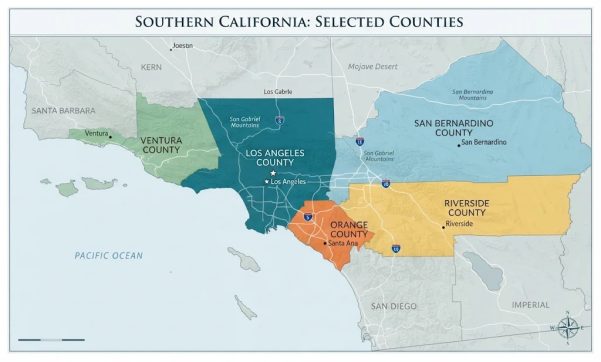
Orange County
Orange County continues to attract buyers interested in established communities, coastal living, excellent amenities, and convenient access to employment centers.
Affordability remains a consideration, particularly for first-time buyers. Well-maintained properties in desirable neighborhoods may continue attracting interest even when the broader market slows.
Los Angeles County offers one of the most diverse housing markets in California. Buyers can choose from condominiums, historic properties, suburban homes, and luxury residences.
Pricing can vary dramatically between neighborhoods, making local comparable sales particularly important.
Ventura County
Ventura County offers a combination of coastal communities, suburban neighborhoods, and more rural residential settings.
Buyers looking for a different pace of life while remaining connected to the greater Los Angeles area may find interesting opportunities here.
Riverside County
Riverside County continues to appeal to households looking for more space and potentially more attainable home prices than many coastal markets.
Buyers should consider commuting patterns, property taxes, insurance, and overall monthly ownership costs when comparing communities.
San Bernardino County
San Bernardino County offers a wide range of housing choices, from traditional suburban neighborhoods to properties near mountain and recreational areas.
For buyers with some flexibility regarding location, this market may offer alternatives worth exploring.
The important takeaway is that a regional forecast is only the starting point. A neighborhood-level market analysis provides a much clearer picture of what a particular home might sell for and how much competition a buyer may encounter.
7. Looking Beyond Winter: What Could Spring 2027 Bring?
As we approach the end of the year, many homeowners are already thinking about their plans for 2027.
Will more buyers return to the market? Will homeowners finally decide to sell? Could lower mortgage rates stimulate additional activity?
Several developments could influence the spring market.
Mortgage rate changes
If borrowing costs become more favorable, some buyers who have been waiting on the sidelines may decide to move forward.
A potential increase in available homes
Spring traditionally brings more listings. Whether that translates into significantly more inventory will depend on homeowner confidence and the financial considerations surrounding moving.
Changing buyer expectations
Buyers may continue to place greater importance on home condition, value, energy efficiency, and the overall cost of ownership.
Seller pricing adjustments
As buyers become more selective, sellers may need to be more realistic about initial asking prices and willing to respond to market feedback.
Our outlook is that spring 2027 could bring increased activity, but the strength of that activity will depend heavily on financing conditions and local housing supply.
Rather than assuming the market will suddenly become more competitive, buyers and sellers should prepare for several possible scenarios.
8. How to Prepare for Your Next Real Estate Move
Whether you are considering buying, selling, or simply evaluating your options, the final months of 2026 are a good time to get organized.

Here are some practical steps worth considering.
For homeowners:
-
Find out what comparable homes have recently sold for in your neighborhood.
-
Review your current mortgage balance and estimated equity.
-
Identify repairs or improvements that could affect your home’s appeal.
-
Consider your next housing needs and financial objectives.
-
Determine whether selling this winter or in spring 2027 makes more sense.
For prospective buyers:
-
Review your credit and financing options.
-
Establish a realistic purchase budget.
-
Get preapproved with a qualified mortgage professional.
-
Identify neighborhoods that meet your needs.
-
Monitor new listings, price adjustments, and recent sales.
-
Be prepared to act when the right property becomes available.
One additional suggestion: Don’t wait until you are ready to make a move to start understanding your local market.
Knowing your options in advance can put you in a much stronger position when the time comes.
9. Southern California Real Estate: Frequently Asked Questions
Are Southern California home prices expected to increase in 2027?
Home prices could experience modest appreciation in some communities, particularly where available inventory remains limited. However, appreciation will depend on mortgage rates, buyer demand, and local economic conditions. Not every community or property type will follow the same pattern.
Is the Southern California housing market slowing down?
Sales activity has softened compared with the previous year. However, home values have remained relatively resilient. This suggests a market where buyers are more selective rather than one experiencing a uniform decline in property values.
Should I purchase a home before the end of 2026 or wait until 2027?
That depends on your finances, housing needs, and the properties available to you. Waiting could provide additional choices, but it could also mean facing more competition if buyer activity increases. Buyers should focus on affordability and long-term suitability rather than trying to predict the perfect moment.
Why aren’t more homeowners selling their properties?
One major reason is the mortgage rate lock-in effect. Homeowners with substantially lower interest rates may be reluctant to sell and take on a higher mortgage payment. This can restrict the number of homes entering the market.
Will winter buyers have more negotiating power?
Some may. Reduced seasonal activity can create opportunities to negotiate with sellers, particularly when a property has been on the market for an extended period. However, desirable homes can still attract strong offers.
How do I determine what my Southern California home is worth?
A comparative market analysis prepared by a knowledgeable local real estate professional is a good starting point. It considers recent comparable sales, competing listings, property condition, and neighborhood characteristics.
When should I start preparing to sell my home in spring 2027?
Ideally, begin several months in advance. This gives you time to address repairs, organize the property, improve curb appeal, and establish an appropriate pricing and marketing strategy.
10. Your Next Real Estate Move Starts With Understanding the Market
The Southern California real estate market continues to evolve, and winter 2026 may present opportunities for people who approach their decisions with the right information.
For some homeowners, this may be the ideal time to explore selling before the spring competition arrives. For buyers, a quieter winter market could provide an opportunity to find a property and negotiate favorable terms.
For others, the smartest decision may be to prepare now and make a move sometime in 2027.
There is no universal answer, because every homeowner, buyer, and property has a different set of circumstances.
At The Carnahan Family, we believe successful real estate decisions begin with understanding the market, evaluating your options, and developing a strategy that makes sense for your individual goals.
Thinking About Making a Move in Southern California?
Whether you’re considering selling your home, searching for your next property, downsizing, or simply curious about current home values, we’re happy to help you explore your options.
Contact Rod McIntosh today to discuss your real estate goals and request a personalized evaluation of your local housing market.
Rod McIntosh — Helping Southern California homeowners make informed real estate decisions for 50 years,
Looking for an agent who leads with knowledge, not guesswork? That’s exactly the standard we hold ourselves to.
Call me for professional and experienced guidance.

Rod McIntosh | CA DRE# 00601009
Exp Realty of CA Inc. | CA DRE# 01878522
- (661) 803-1662
- (818) 898-2255
- (661) 259-1100